

Milk Blebs While Breastfeeding: What they are, why they happen and how to ease them
A tiny white spot on your nipple shouldn’t be able to cause so much pain - but if you’ve had a milk bleb, you’ll know it can make every feed feel like a sharp pinprick. The good news? Milk blebs are common, they usually settle with gentle care, and you can almost always keep breastfeeding through them.
As an IBCLC lactation consultant supporting families across Bath, Bristol, Wiltshire and Somerset, I see milk blebs regularly. Advice online is often conflicting (and some of it is out of date), so here’s a clear, evidence-based guide.
What is a milk bleb?
A milk bleb is a small, shiny white, cream or yellowish dot on the tip of the nipple, where a milk pore has become covered or blocked. You may also hear it called:
a milk blister or nipple blister
a blocked nipple pore
a milk pearl or nipple bleb
Common signs include:
a white spot on the nipple that doesn’t wipe away
sharp, pinpoint or burning nipple pain during and after feeds
sometimes a tender or firm area in the breast behind it
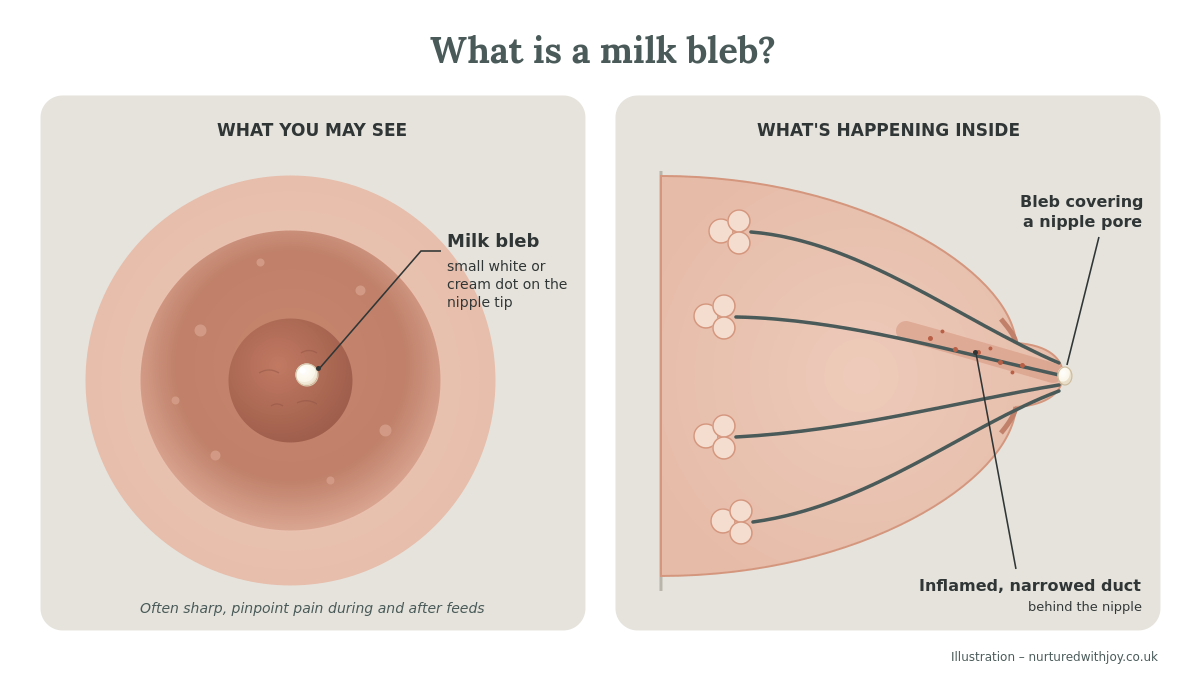
What causes milk blebs?
We don’t fully understand why milk blebs form, but current thinking links them to inflammation in the milk ducts rather than a simple “plug” of milk. Things that can make them more likely include:
Latch or positioning: a shallow latch can cause friction and pressure on the nipple tip.
Oversupply: making more milk than your baby needs can increase inflammation in the breast.
Over-pumping: pumping extra to “empty” the breast can drive supply up and make things worse.
Pump flange fit: a flange that’s too small or suction that’s too high can irritate the nipple.
Pressure: tight bras, bag straps or sleeping on one side.
How to ease a milk bleb at home
Gentle is the key word. The aim is to calm inflammation, not to force anything out.
Keep feeding as normal: breastfeeding is safe and helps keep milk moving. There’s no need to pump extra.
Don’t pick, squeeze or pop it: opening it yourself can damage the skin and make the inflammation worse.
Try cold, not heat: a cool pack after feeds can help with swelling and pain.
Pain relief: ibuprofen or paracetamol may help if suitable for you - check with your pharmacist or GP.
Light touch only: very gentle, sweeping strokes towards the armpit rather than deep or firm massage.
Check latch and flange fit: small changes here often make the biggest difference.
If a bleb isn’t settling, your GP may suggest a prescribed treatment, such as a steroid cream, to calm the inflammation.
When to seek help
Contact your GP, call NHS 111, or book an IBCLC if you notice:
a red, hot, swollen or wedge-shaped area on your breast
fever, chills or flu-like symptoms
redness spreading around the bleb, or pus
a bleb that keeps coming back or isn’t improving
pain that makes you dread feeds
My top 5 tips to help prevent milk blebs
Aim for a deep, comfortable latch. Feeding shouldn’t hurt - if it does, it’s worth getting your latch checked.
Feed responsively. Follow your baby’s cues rather than the clock, and avoid pumping more than your baby needs.
Get your pump flange measured. The right size protects your nipples and makes pumping more effective.
Wear a well-fitting bra. Supportive, but nothing that digs in or presses on the breast.
Keep nipple care simple. Plain water in the shower is enough - no need to wash before every feed.
Frequently asked questions
Can I breastfeed with a milk bleb?
Yes. It’s safe for your baby, and continuing to feed is part of helping it settle.
Should I pop a milk blister?
No. Opening it yourself can damage the skin and make the inflammation worse. If it isn’t improving, speak to your GP or an IBCLC.
Is a white spot on my nipple always a milk bleb?
Not always. Other nipple conditions can look similar, so if you’re unsure, get it checked.
Breastfeeding support in Wiltshire and Somerset
If you’re struggling with milk blebs, nipple pain or blocked ducts, you don’t have to work it out alone. As an internationally certified IBCLC lactation consultant, I offer home visits across Bath, Bristol, Wiltshire and Somerset, and virtual breastfeeding consultations anywhere in the UK.
References
Mitchell KB et al. (2022). Academy of Breastfeeding Medicine Clinical Protocol #36: The Mastitis Spectrum. Breastfeeding Medicine, 17(5), 360–376. https://www.bfmed.org/protocols
Mitchell KB & Johnson HM (2020). Breast pathology that contributes to dysfunction of human lactation: a spotlight on nipple blebs. Journal of Mammary Gland Biology and Neoplasia, 25, 79–83.
NHS: Mastitis. nhs.uk/conditions/mastitis
Last reviewed - September 2026